St. John’s Wort — Medicine for Mood, or a Supplement That Behaves Like a Drug?
Part 3 of Series: Natural, But Not Neutral
(Educational only — not medical advice.)
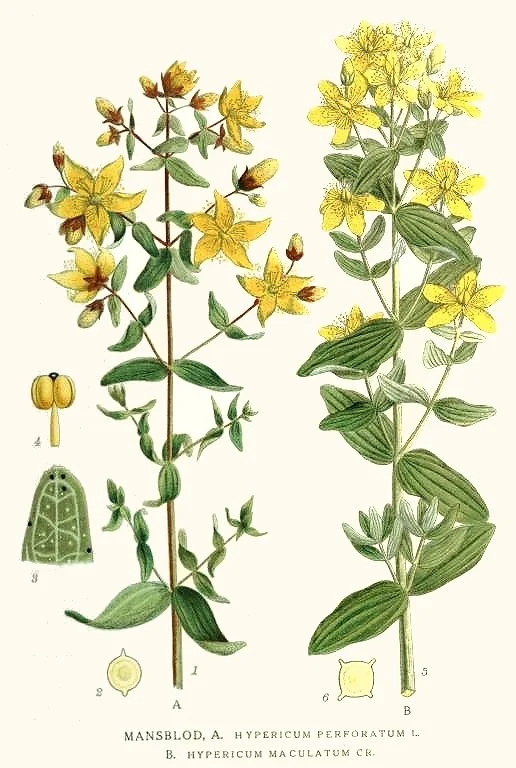
St. John’s wort is one of the clearest examples of why the supplement aisle can become clinically complicated. People use it as “herbal medicine for mood,” but its interaction profile can be serious enough that, functionally, it behaves like a drug in the body.
Sources: NCCIH: St. John's Wort — Usefulness and Safety | NCCIH: St. John's Wort and Depression — In Depth | Mayo Clinic: St. John's wort
What it is (and why it belongs in this series)
St. John’s wort (Hypericum perforatum) is a flowering plant used historically for mood-related concerns. In many online communities it is framed as “natural antidepressant support.” In the U.S. it is typically sold as a dietary supplement, but clinicians often treat it as drug-like because of how strongly it can interact with prescription medications.
The central issue isn’t just whether it might help some people with mild to moderate depression. The central issue is that it can change the metabolism of other drugs, sometimes in dangerous or life-threatening ways.
Sources: NCCIH: St. John's wort | NCCIH: St. John's wort and depression (in depth) | Mayo Clinic: St. John's wort
Drug vs. medicine vs. supplement
In common language, many people use St. John’s wort as “medicine for mood.” But pharmacologically, it often behaves like a drug because it can induce metabolizing enzymes and transporters, lowering blood levels of many medications.
That includes medicines where reduced effectiveness is not trivial—such as birth control pills, cyclosporine (transplant rejection prevention), and many others. This is why health agencies emphasize interaction risk.
Sources: NCCIH: St. John's wort | Mayo Clinic: St. John's wort (interactions)
What the evidence says for depression
NCCIH explains that many studies have evaluated St. John’s wort for depression and suggests it may help some people with mild or moderate depression, with uncertainty about severe depression and long-term use. Research results vary by study design, product standardization, and population.
For a consumer audience, the responsible message is: evidence is most supportive for mild-to-moderate depression in some settings, but product variability and interaction risk make unsupervised use risky—especially for anyone taking other medications.
Sources: NCCIH: St. John's wort | NCCIH: St. John's wort and depression (in depth)
The big safety issue: interactions and serotonin risk
St. John’s wort can interact with many medications, and combining it with certain antidepressants can raise serotonin to dangerous levels (serotonin syndrome). NCCIH describes symptoms and emphasizes that this can become potentially life-threatening. Mayo Clinic also warns about serotonin-risk interactions and lists many medication categories affected by St. John’s wort.
Another practical concern is photosensitivity: at high doses, sun sensitivity can become significant.
Sources: NCCIH: St. John's wort and depression (in depth) | Mayo Clinic: St. John's wort
Practical consumer checklist
1) If you take any prescription medication, treat St. John’s wort as “interaction-first.” Talk to a clinician or pharmacist before using it.
2) Do not combine it with antidepressants unless a clinician explicitly supervises the plan.
3) If you’re using hormonal birth control, transplant meds, anticoagulants, HIV meds, or chemotherapy agents, avoid self-experimentation.
4) If mood symptoms are persistent, severe, or include suicidality, seek clinical care rather than attempting to self-treat with supplements.
Sources: NCCIH: St. John's wort | Mayo Clinic: St. John's wort
Short FAQ
Is St. John’s wort an FDA-approved antidepressant? No. In the U.S. it’s typically sold as a dietary supplement.
Is it “medicine”? People use it therapeutically, but the biggest medical reality is its interaction profile.
What’s the #1 takeaway? If you take other meds, don’t start it without checking interactions.
Sources: NCCIH: St. John's wort
References
NCCIH: St. John's Wort — Usefulness and Safety
NCCIH: St. John's Wort and Depression — In Depth
Series promise: “We separate tradition, internet claims, science, and regulation—so you can decide what belongs in your wellness routine.”